ข่าวอุตสาหกรรม
2025-12-09
-div class="cir">
ข่าวอุตสาหกรรม
ศาสตร์แห่งความเย็นของระบบทำความเย็นในครัวของโรงแรม
Keeping It Cool: Why Hotel Kitchens Need Industrial-Strength Chill
In the world of fine dining and bustling hotel operations, there’s an unsung hero working tirelessly behind the scenes: the Hotel Kitchen Refrigeration Systems . These aren’t your average home refrigerators; they are complex, powerful, and essential pieces of equipment that uphold food safety, minimize waste, and ensure the quality of every dish that leaves the kitchen.
A successful hotel kitchen runs on precision, and maintaining proper temperatures is arguably the most critical component. Imagine the sheer volume of ingredients—fresh produce, meats, dairy, and prepared foods—a large hotel needs to store. If any part of the refrigeration chain fails, the consequences can range from costly spoilage to severe foodborne illness outbreaks, jeopardizing the hotel’s reputation and bottom line.
More Than Just a Fridge: Types of Refrigeration in a Hotel Kitchen
A hotel kitchen utilizes several distinct types of refrigeration, each serving a specific function and temperature requirement. This specialized approach maximizes efficiency and food quality.
Walk-in Refrigerators and Freezers
These are the backbone of the kitchen’s cold storage. Walk-in units are essentially refrigerated rooms that allow staff to store large quantities of ingredients and easily organize them. They are custom-built to the kitchen’s specifications and operate on powerful, often remote, compressor systems.
-
Refrigerators (Chill Rooms): Typically maintain temperatures between and ( and ). This range is vital for slowing the growth of most harmful bacteria.
-
Freezers (Blast Freezers/Standard Freezers): Standard freezers usually hold temperatures around ( ). Some kitchens also use specialized blast chillers or blast freezers to rapidly cool hot foods. Rapid cooling is a crucial food safety technique to move food quickly through the "Danger Zone" ( to or to ), where bacteria multiply fastest.
Reach-in and Under-counter Units
These smaller, more accessible units are strategically placed throughout the kitchen for immediate access during cooking.
- Reach-in Refrigerators: Tall, standalone units located near prep areas and cooking stations. They hold ingredients that chefs need to grab quickly.
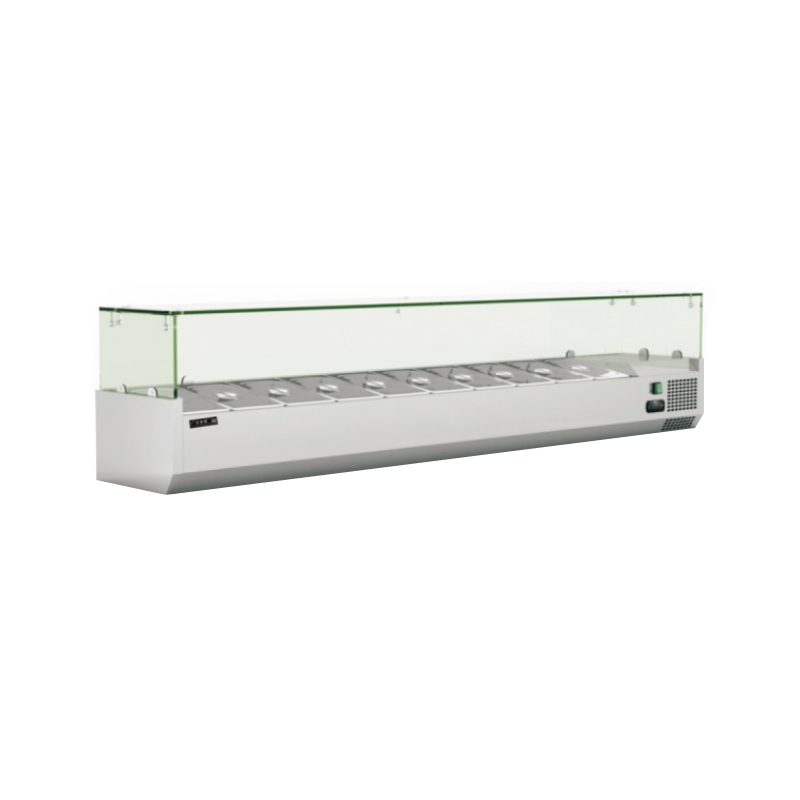
- Under-counter Units (Chef Bases): These are built directly into the cooking line and often double as a countertop for prep work. Their proximity to the cooking surface ensures maximum speed and efficiency during service.
The Technology Under the Hood: The Refrigeration Cycle
All these units, from the largest walk-in to the smallest prep fridge, rely on the same fundamental principle: the refrigeration cycle. This is a closed-loop system that moves heat from the inside of the cabinet (where it’s cold) to the outside (where it’s warmer), making the process essentially a continuous heat pump.
The Four Key Components
- Compressor: This is the system’s “heart.” It compresses the low-pressure, low-temperature refrigerant gas into a high-pressure, high-temperature gas. This compression is what makes the heat manageable to be expelled.
- Condenser: The hot, high-pressure gas flows through the condenser coils, which are typically located outside the walk-in unit or on the back of the reach-in fridge. Air or water is blown over the coils, cooling the gas and causing it to condense back into a high-pressure liquid, releasing the heat into the surrounding environment.
- Expansion Valve (or Metering Device): This component controls the flow of the liquid refrigerant as it moves from the high-pressure side to the low-pressure side. As the liquid passes through the small opening, its pressure drops dramatically, causing its temperature to plummet.
- Evaporator: The extremely cold, low-pressure liquid refrigerant flows into the evaporator coils inside the refrigerated space. The warm air from the food cabinet is blown across these coils. As the refrigerant absorbs the heat from the air, it boils and turns back into a low-pressure gas, completing the cycle and leaving the air inside the fridge cool.
The efficiency and reliability of these components are paramount to maintaining the strict food safety standards required of Hotel Kitchen Refrigeration Systems . Modern systems also incorporate advanced digital controls and monitoring to track temperatures continuously and alert staff to any potential failures before disaster strikes.